
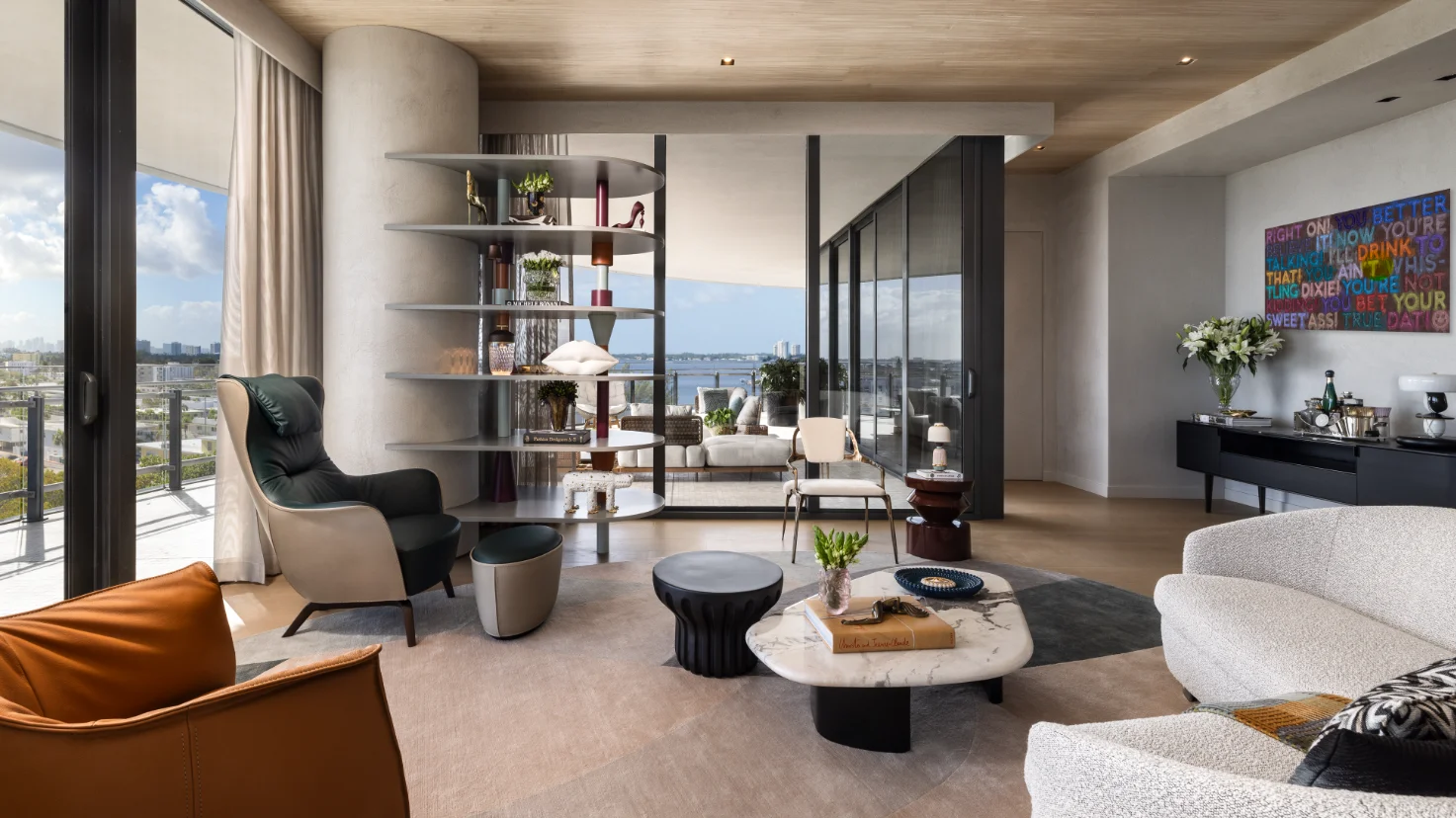
Miami is not a neutral backdrop. Its light, its architecture, and its cultural layering all shape what a home can become. When a client arrives knowing they want something that is neither too traditional nor too cold, transitional interior design is often the answer. The real question is how it is executed.
At Design Solutions Miami, this is not a default or a compromise. It is, instead, a deliberate approach built on the specific character of South Florida’s residential landscape, combining classical structure with the clean confidence of contemporary design. That combination requires a different kind of attention at every stage.
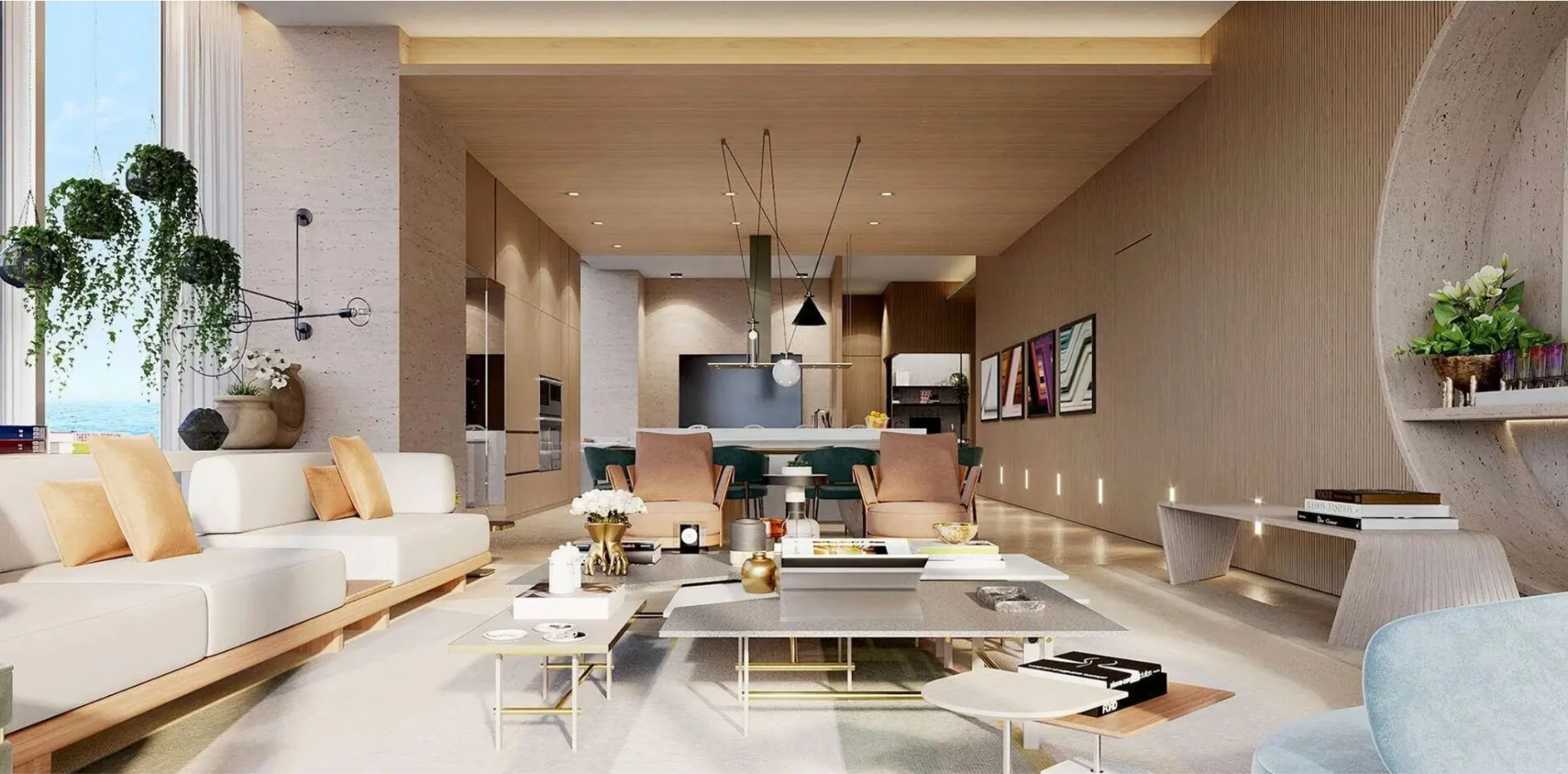
How we approach transitional interior design in Miami
Every project at Design Solutions begins with the architecture of the space. Before any material or furniture decision is made, we read what the home already communicates: its proportions, its light, its relationship to the exterior, and its history. Only then does the design work begin.
In South Florida, that reading almost always includes art deco influence. The region’s architectural heritage, present in the detailing of older Coral Gables homes and the lobby design of newer Coconut Grove developments, provides a natural foundation. We build on that foundation rather than erasing it. In other words, the past informs the project rather than being discarded by it.
From there, the process layers materials, finishes, and furniture in a way that creates coherence. Classical forms appear in updated fabrics. Custom millwork uses simplified profiles. Warm natural stone sits against polished contemporary fixtures. Ultimately, each decision is tested against the whole.
The South Florida sensibility in our projects
Transitional interior design in Miami has to work with the city’s light. The South Florida sun is direct and abundant. It reveals material quality, exposes proportion errors, and amplifies color in ways that a New York or Chicago interior never faces. In short, latitude demands a different kind of discipline.
Our palette selections, texture layering, and window treatment strategies all account for that reality. Linen and natural fibers perform differently here than in cooler climates. Stone from local quarries carries a warmth that connects a home to its region. Tropical planting and outdoor views, framed through considered window placement, become part of the interior composition.
The result is a transitional style home design that feels specifically Miamian, not a style imported from another city and applied here by default.
Projects that define our approach
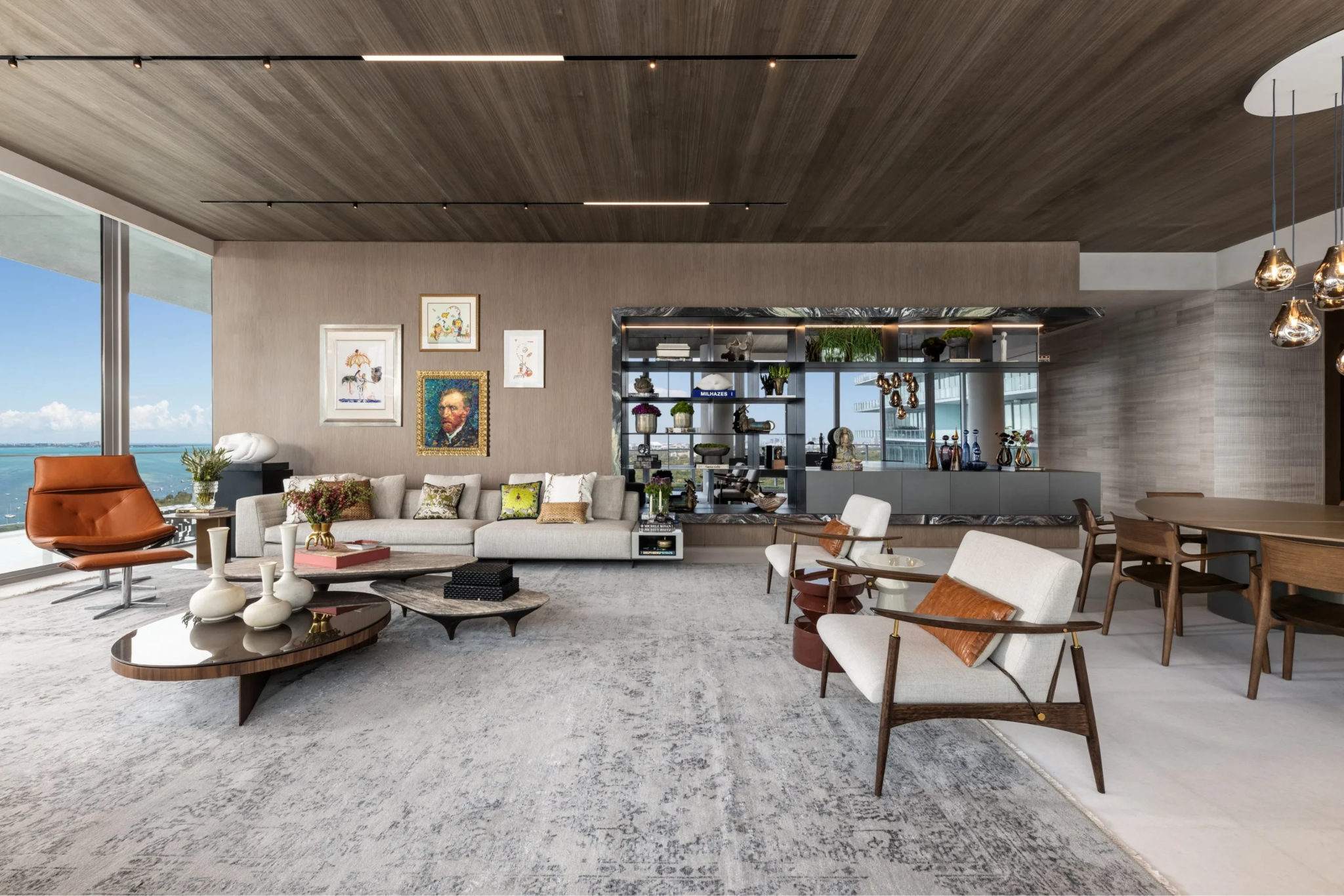
Grove at Grand Bay
This penthouse project in Coconut Grove presented a canvas that demanded both grandeur and restraint. The client’s brief was clear: a home for serious entertaining that could also feel intimate and personal on an ordinary Tuesday evening.
Our response was built on a warm neutral palette anchored by custom millwork. High-performance linens and velvets in tonal grays and warm creams covered the upholstery across the living areas. Similarly, contemporary Italian case pieces sat alongside wing chairs with classic proportions and updated fabric. The art collection, gathered over two decades of travel, set the emotional tone throughout.
Oceanfront at Bal Harbour
The client relocating from Connecticut brought a deep appreciation for traditional New England interiors and a clear desire to leave the formal heaviness behind. A transitional approach, with its ability to honor that heritage while opening the space to Florida’s light and scale, was the natural direction.
We specified a master suite anchored by a custom upholstered bed and flanking nightstands that bridged the two aesthetics. The bathroom featured large-format travertine, a sculptural freestanding soaking tub, and custom vanities in a warm muted tone. Nothing felt imported from a catalog. Indeed, everything was designed for this specific room.
Ponce Davis, Coral Gables
Single-family residences in Coral Gables carry the weight of their architectural character. Mediterranean revival detailing, deep eaves, and Spanish-tile rooflines define the neighborhood. Our approach here meant honoring that character in the interior architecture while, equally, bringing the furnishings and finishes into the present.
Arched doorways were refined with a finer plaster finish. Custom bookshelves flanking the fireplace used simplified columns rather than ornate carvings. The living room palette moved from warm ivory through dusty bronze, with a contemporary sectional providing generous seating without overwhelming the room’s scale. In the dining room, a sculptural chandelier above a traditional oval table created a pairing that works precisely because transitional style home design allows it. That restraint, as a result, gave the room its authority.
What makes this work at a luxury residential level
The difference between a result that succeeds and one that simply avoids committing to a style is discipline.
Blending traditions creates permission to mix. However, that permission requires editorial precision. Every piece that enters a room needs to earn its place in relation to everything else. A sofa that is too large collapses the balance. A finish that is too shiny breaks the material continuity. Likewise, a pattern that is too bold fragments the palette.
This is why execution at a luxury residential level is not a DIY exercise. It requires a design team that can hold the full vision of a project through every procurement decision, site visit, and installation sequence.
Begin your project in Miami
Design Solutions Miami works exclusively in the luxury residential market across Coconut Grove, Coral Gables, Miami Beach, Brickell, and surrounding neighborhoods. Our studio accepts a limited number of projects each year, allowing the full team, led by Luciana Fragali, to be present and engaged at every stage.
If your home should reflect who you are, and you want a design partner who will make that happen with precision and discretion, schedule a project review with our team. Our full portfolio of completed luxury residential projects across South Florida is available to explore.
