
Miami’s architectural styles are unlike anything else in the United States. From the pastel geometry of South Beach to the glass towers redefining Brickell, each neighborhood expresses a distinct architectural style, and together they read like a living textbook of design history, and a preview of where residential architecture is heading next.
For affluent homeowners relocating to South Florida, understanding these neighborhoods is not just a cultural exercise. It directly shapes what is possible in your future home.
What makes Miami’s architectural styles unique
Miami developed in compressed bursts. Each wave of growth, from the 1920s resort boom to the postwar tourist surge to the vertical ambitions of the 21st century, left a distinct imprint on the built environment. The result is a city where Art Deco, Mediterranean Revival, Tropical Modernism, and contemporary high-rise architecture coexist within a few miles of each other.
That variety is precisely what draws designers like Luciana Fragali, founder of Design Solutions Miami, to the city. “Every neighborhood has its own architectural DNA,” she notes. “Understanding that context is the first step in creating a home that feels rooted and right.”
South Beach: Art Deco at its peak
South Beach holds the largest concentration of Art Deco architecture in the world, with more than 800 protected buildings dating from the 1920s and 1930s. Its architectural style is defined by geometric ornamentation, porthole windows, curved facades, pastel exteriors, and nautical references that nod to the city’s coastal identity.
Walk along Ocean Drive or Collins Avenue and the buildings communicate an unmistakable optimism. Landmarks like the Colony Hotel and the Delano South Beach have been photographed, filmed, and replicated the world over, yet they still feel singular in person.
For interior design projects in South Beach residences, the architectural envelope sets clear expectations: proportions matter, period details deserve acknowledgment, and the interplay between interior and exterior is never incidental.
Coral Gables: Mediterranean Revival and civic grandeur
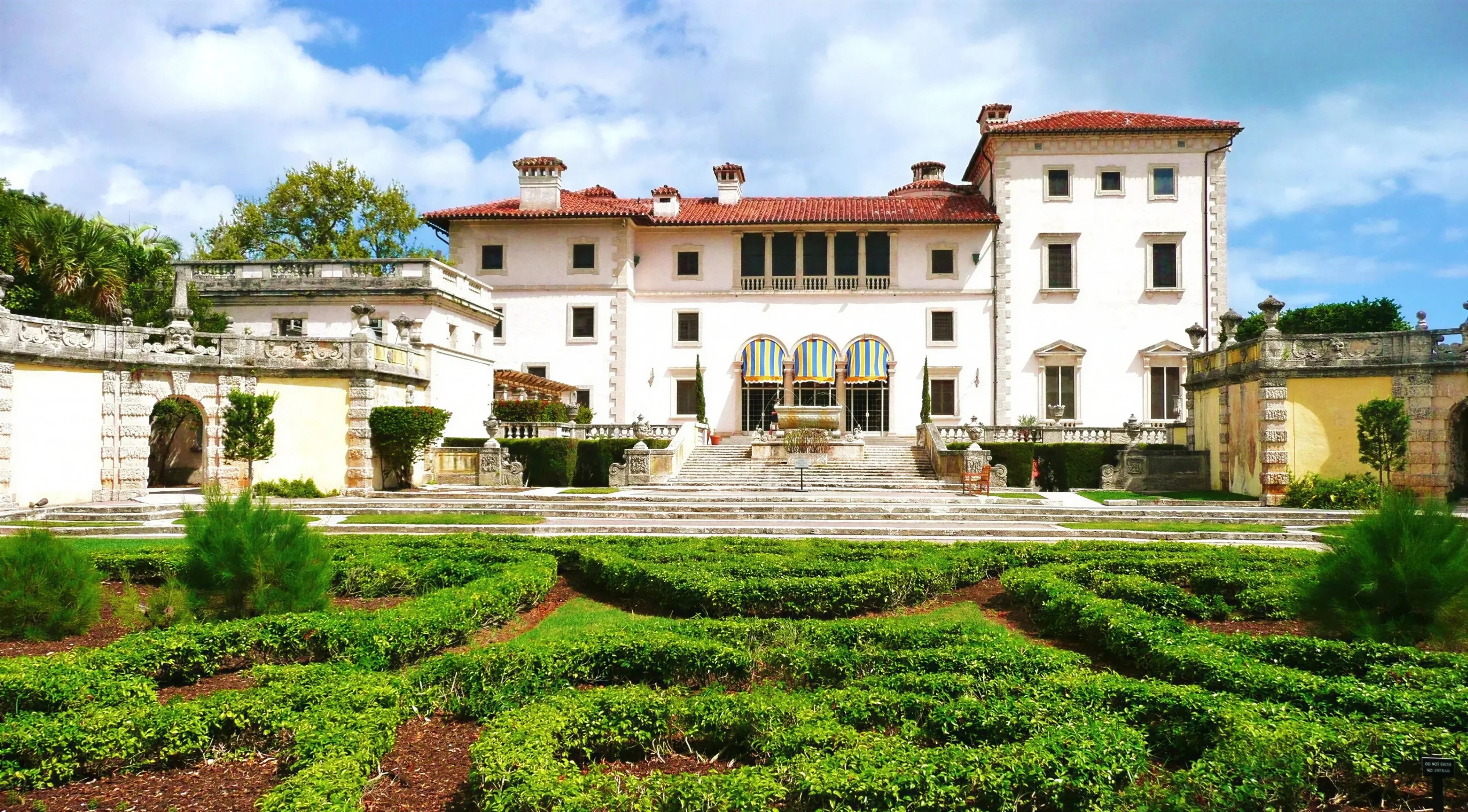
Coral Gables was designed as a city, not merely developed as one. George Merrick’s vision in the 1920s produced a neighborhood of extraordinary coherence, built around Mediterranean Revival architectural styles drawn from Spanish and Italian precedents.
The hallmarks are immediately recognizable: stucco walls in warm tones, red clay roof tiles, wrought-iron balconies, arched entryways, and loggias that bridge indoor and outdoor living. The Biltmore Hotel and the Venetian Pool are the most cited examples, but the residential streets of Coral Gables carry the same commitment to material quality and formal discipline.
This consistency is not accidental. Coral Gables maintains strict architectural review standards to preserve its aesthetic. For design teams working in the area, that means a conversation between the existing architecture and any new interior vision is always part of the project.
Coconut Grove: Tropical Modernism and Bahamian roots
Coconut Grove is Miami’s oldest neighborhood, and its architectural styles reflect that layered history. The area’s earliest settlers arrived from the Bahamas and built according to their own traditions, producing modest, well-ventilated Conch-style structures adapted to tropical heat.
That foundation evolved into something more ambitious. Tropical Modernism, an approach that emerged from the mid-20th century, treated the boundary between indoors and outdoors as a design opportunity rather than a limitation. Sliding walls, shaded terraces, cross-ventilation strategies, and native planting became architectural tools rather than afterthoughts.
Architects including Max Strang have continued this tradition in Coconut Grove, producing private residences that feel profoundly of this place. The Kampong botanical garden, a National Tropical Botanical Garden property in the neighborhood, offers a vivid example of how architecture and landscape can be designed as a single system.
For Design Solutions Miami, Coconut Grove projects frequently involve navigating the tension between the neighborhood’s intimate human scale and clients’ desire for contemporary amenity. That tension, handled well, produces some of the most compelling residential work in South Florida.
Little Havana: Spanish Colonial adapted to Miami
Little Havana’s architectural style is rooted in Spanish Colonial tradition, adapted over decades by Miami’s Cuban-American community. Single-story homes with vivid facades, decorative ceramic tiles, deep front porches, and covered walkways define the neighborhood’s streetscape.
The scale is domestic and legible. The Tower Theater on Calle Ocho and Máximo Gómez Park, known locally as Domino Park, anchor the neighborhood’s public identity. They are precise, purposeful buildings that carry deep cultural meaning without civic grandeur.
For interior designers, Little Havana presents a different set of conversations than Coral Gables or South Beach. The residential typology is smaller and the design vocabulary is more personal. Projects here tend to be about intensification: using color, material, and craft to amplify what is already present rather than introducing a foreign visual language.
MiMo District: postwar optimism along Biscayne Boulevard
The Miami Modern movement, known as MiMo, emerged in the 1950s and 1960s as a response to postwar prosperity and the city’s growing reputation as a leisure destination. Concentrated along Biscayne Boulevard, MiMo architectural styles are recognizable by their asymmetrical compositions, floating staircases, brise-soleil screens, boomerang canopies, and kidney-shaped pools.
The Vagabond Motel is among the most photographed examples of the style. The Fontainebleau Miami Beach, though technically in Miami Beach, demonstrates MiMo’s ambitions at resort scale. Both buildings reflect a moment when optimism was a design principle.
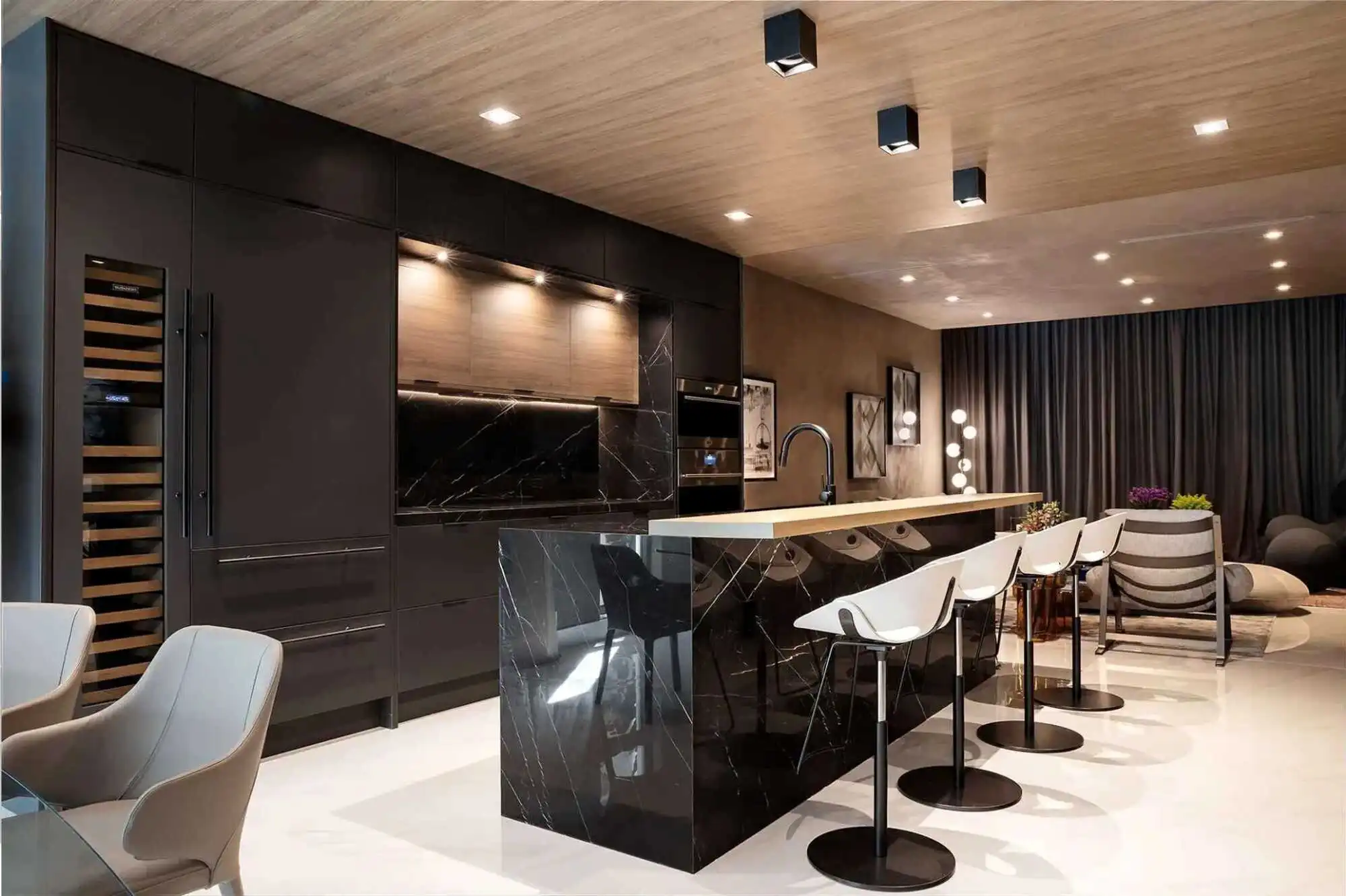
MiMo interiors from this period are increasingly sought after by design-minded buyers. The spatial generosity of the era, combined with period detailing that rewards careful restoration, makes these properties strong candidates for high-quality interior projects.
Downtown Miami and Brickell: contemporary at scale
The skyline that most visitors associate with Miami today is largely a product of the last two decades. Downtown and Brickell have developed at remarkable speed, producing a dense concentration of contemporary and minimalist high-rise residential architectural styles defined by glass facades, clean structural expression, and an increasing emphasis on sustainable systems.
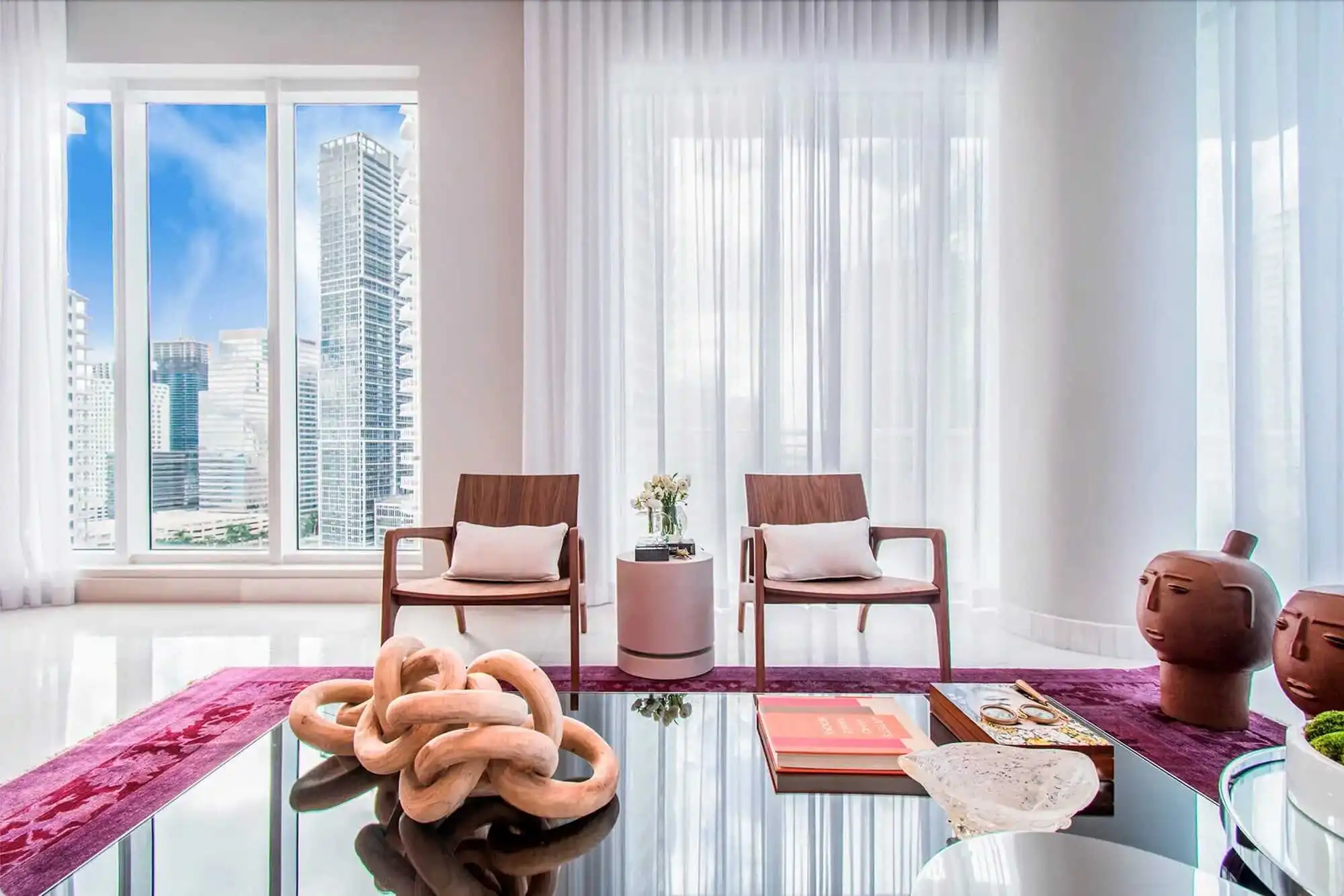
The Pérez Art Museum Miami, designed by Herzog and de Meuron, and Brickell City Centre demonstrate how the area’s design ambitions extend beyond residential typologies into cultural and commercial infrastructure. For luxury condo residents in these buildings, interior design must operate in dialogue with architecture that already makes strong visual statements.
Projects in this context often involve working with panoramic views as the primary design element, specifying materials that hold their own against glass and steel, and creating domestic warmth within volumes that can feel imposing at first encounter.
Design District: architecture as cultural statement
The Miami Design District has repositioned itself as a laboratory for experimental architectural styles. The mix of structures here actively resists categorization. Buckminster Fuller’s Fly’s Eye Dome and the Sou Fujimoto-designed Palm Court represent different ends of the experimental spectrum, but both treat architecture as a form of cultural argument rather than mere construction.
The Design District’s concentration of luxury retail, galleries, and design showrooms has made it a destination for the same audience that commissions serious residential projects. For interior designers working in Miami, it is both a sourcing resource and a demonstration of what clients in this market are exposed to and expect.
Miami’s architectural styles and what they mean for your home
Miami’s built environment is an active participant in every residential design project undertaken here, not merely a backdrop. The neighborhood you choose, the building type you select, and the architectural styles of the period you inhabit all shape what is possible and what is appropriate inside your home.
Design Solutions Miami has completed more than 450 projects across South Florida’s most architecturally significant neighborhoods: Coconut Grove, Coral Gables, Bal Harbour, Miami Beach, and beyond. That depth of local experience means the firm understands not just what looks right in each context, but what is permitted, what the local suppliers can execute, and what will hold its value over time.
If you are planning a luxury residential project in Miami and want to understand how architecture and interior design work together in your specific neighborhood, contact Design Solutions Miami to schedule a project review.
