
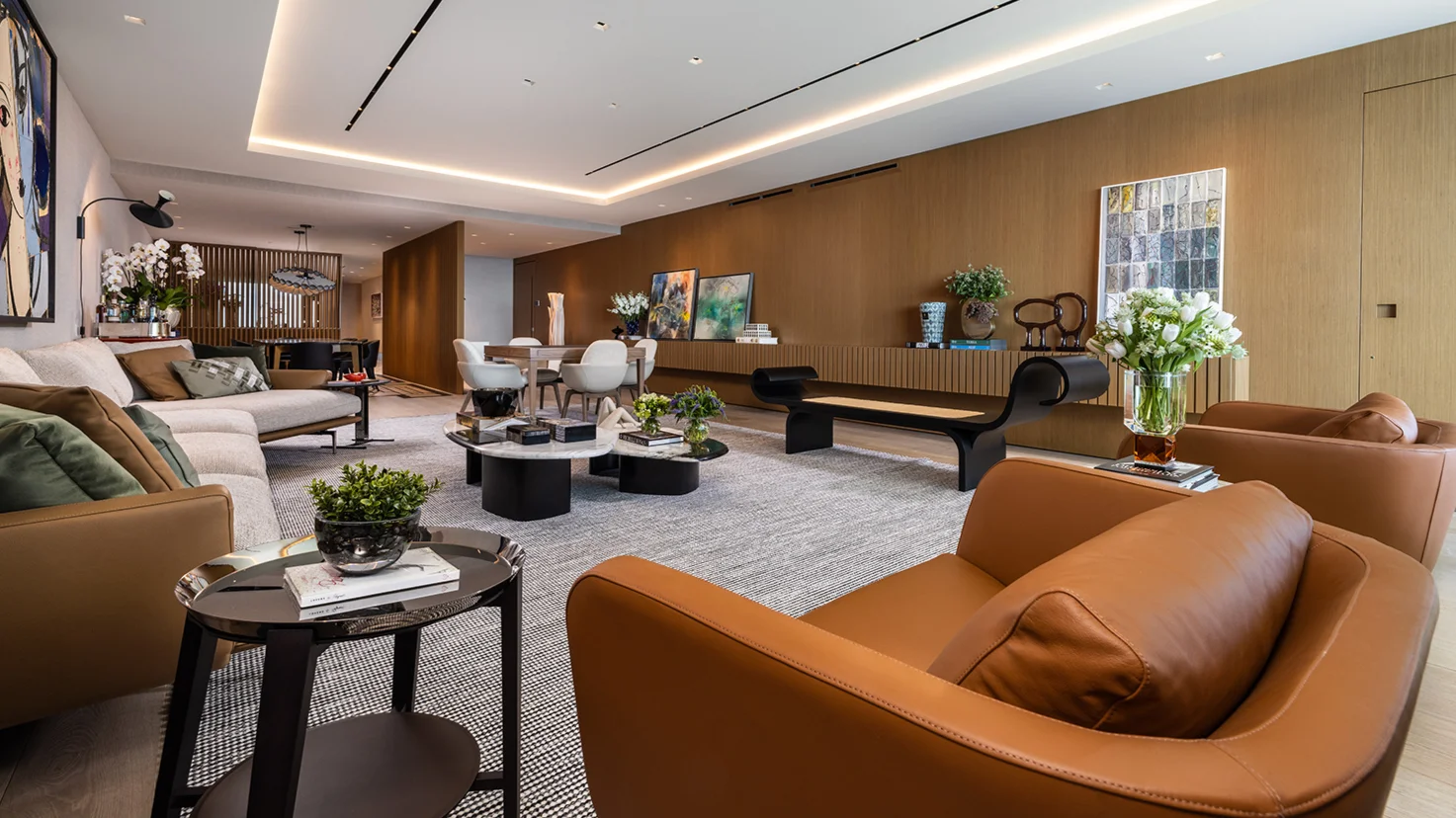
Contemporary interior design is one of the most searched style terms in residential design. It is also one of the most misunderstood.
If you have been drawn to spaces that feel current, composed, and quietly confident, you are likely responding to contemporary design. Understanding what defines it will help you articulate your vision more precisely and choose the right studio to bring it to life.
What is contemporary interior design, really?
At its core, contemporary interior design refers to design that reflects the present moment. Unlike historical styles that are fixed to a specific period, contemporary style is always evolving. What is contemporary today incorporates the aesthetic sensibilities, materials, and cultural influences of right now.
This is the essential distinction most people miss: contemporary design is not a look. It is a time reference. It borrows freely from many traditions, including modern, minimalist, and even classical, but it filters all of them through a current lens.
That is why contemporary interior design feels alive. It does not follow a rigid rulebook. It responds to how people actually live today.
Contemporary vs. modern: the distinction that matters
Many 40 and 50-year-old homeowners use the words “contemporary” and “modern” interchangeably. They are not the same. Understanding this distinction is the most important step before committing to a style direction.
Modern interior design refers to a specific historical movement, primarily from the early to mid-20th century. Think the Bauhaus school, mid-century Scandinavian furniture, and the principle that form follows function. Modern design has a defined aesthetic: clean geometry, flat surfaces, minimal ornamentation, and a palette that tends toward neutrality.
Contemporary style interior, by contrast, has no fixed era. It is fluid. It might incorporate a mid-century silhouette, a piece of raw-edge stone sourced from Brazil, and a custom textile in a color that did not exist in any design vocabulary twenty years ago. The coherence comes not from period consistency but from the designer’s eye and the client’s sensibility.
Understanding this distinction is particularly important for homeowners relocating to South Florida, where the design environment blends coastal ease, art deco heritage, and a genuinely global aesthetic. A studio like Design Solutions Miami has spent over two decades working within this specific context, developing a contemporary vocabulary that is distinctly Miami without being derivative of it.
Key elements that define the style
Clean lines, but not cold
Contemporary interiors favor clean, uncluttered lines. Furniture tends toward simple silhouettes without excessive ornamentation. However, contemporary spaces are not minimal in the way that pure minimalism demands.
Where minimalism removes until there is almost nothing left, contemporary design edits with intention. Accessories, art, and layered textiles are present, but they are chosen carefully. Every element earns its place.
As Luciana Fragali, founder of Design Solutions Miami, has observed, accessories are more than decoration: they are the heartbeats of a home. In a contemporary interior, this philosophy translates into a curated presence, not absence.
A neutral foundation with deliberate contrast
Contemporary style interiors typically begin with a neutral base: whites, warm grays, greiges, and natural tones in stone, wood, and plaster. This foundation allows the eye to rest and creates visual breathing room.
Contrast is introduced intentionally. A deep-toned millwork piece against a light wall. A sculptural chair in a bold upholstery against a composed, neutral sofa. A single piece of art that commands the room. These moments of contrast give contemporary spaces their energy.
Natural materials with refined finishes
Contemporary interior design embraces natural materials, particularly stone, wood, linen, and leather, but always with an emphasis on quality of finish. The difference between a contemporary interior and a rustic one is not the material, it is the precision with which it has been specified and installed.
Spatial openness and flow
These residences tend toward open floor plans or, where the architecture does not permit full openness, a strong visual connection between spaces. Sightlines are considered. Transitions are smooth.
This spatial quality is one of the reasons contemporary design is so well-suited to luxury condominiums and penthouses, where square footage is used with precision and every room must feel purposeful rather than incidental.
In Miami’s luxury high-rises, the open plan is often constrained by the building’s structural core. The elevator shafts, mechanical shafts, and load-bearing elements that are fixed before the interior designer arrives. The skill is in working with those constraints to create the perception of openness without sacrificing acoustic privacy, storage function, or the clear delineation between living, dining, and private zones. A studio that has completed projects in Grove at Grand Bay, 87 Park, and similar buildings has already solved these specific constraints in multiple configurations, which means your project benefits from those solutions from day one.
Technology integration
Unlike traditional design styles, contemporary interior design fully integrates technology rather than concealing it awkwardly. This sets it apart clearly from historical design styles. Smart home systems, integrated lighting, motorized shading, and built-in sound are designed into the space from the beginning, not retrofitted.
A well-executed contemporary interior makes technology feel invisible when you are not using it and effortless when you are. This requires coordination between the interior designer and the technical consultants from the earliest stages of the project.
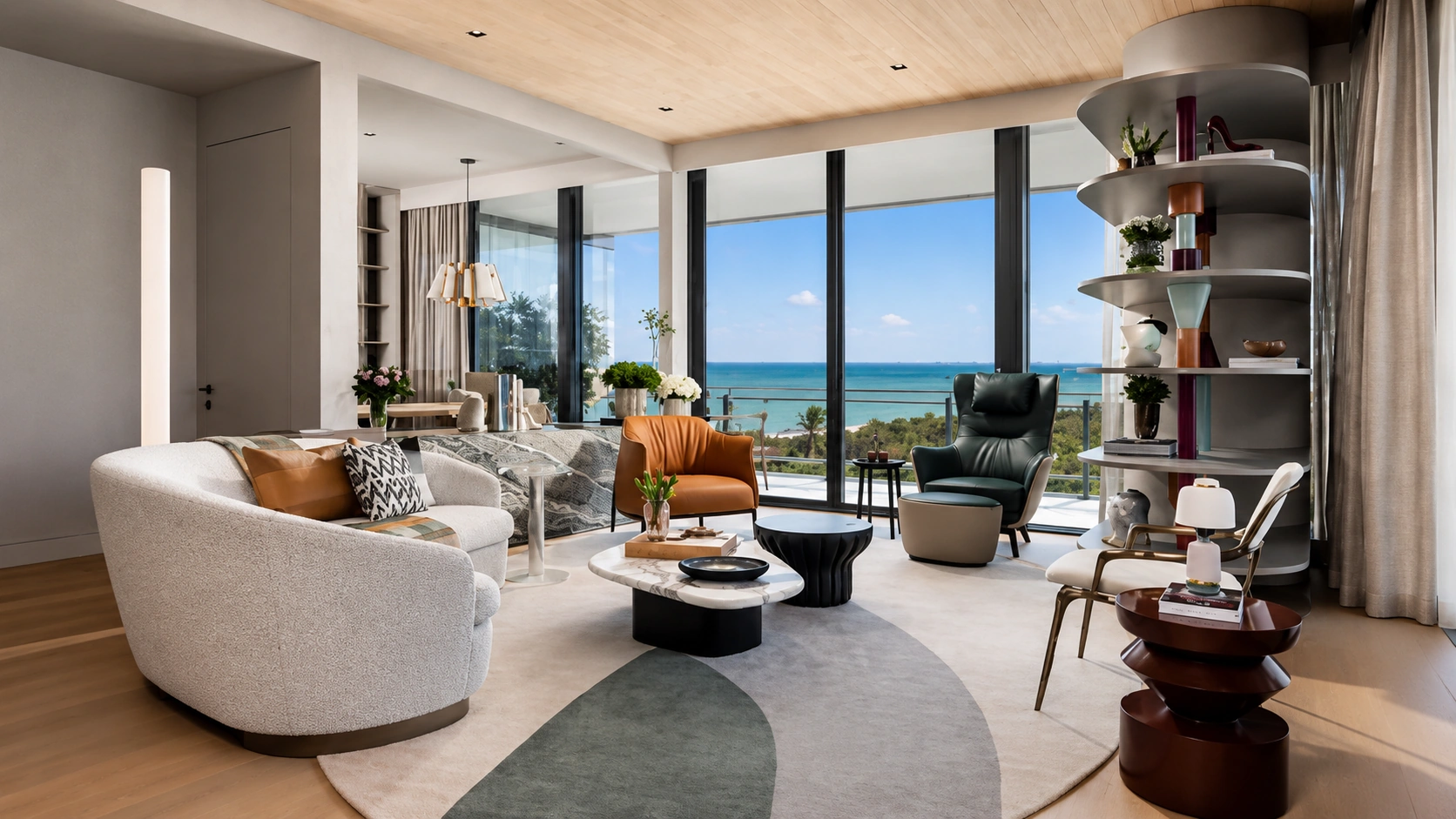
What contemporary interior design looks like in Miami luxury homes
Miami occupies a unique position in the contemporary design landscape. The city’s art deco heritage, tropical light, coastal setting, and international clientele have produced a design culture that is genuinely distinct.
The result here tends to be warmer than its counterpart in, say, Scandinavia or New York. The palette acknowledges the light. The materials respond to the humidity and the proximity to the water. The spaces are designed for a lifestyle that moves between indoors and outdoors more fluidly than in almost any other American city.
At Design Solutions Miami, projects in Coconut Grove, Coral Gables, and Miami Beach reflect this sensibility. Each residence is a bespoke response to its specific context: the orientation of the building, the views it captures, the family that will inhabit it, and the way that family actually lives. The result belongs entirely to its place and its owners.
You can see how this approach applies to the full spectrum of design styles in the guide to transitional interior design, which explores the intersection of classic and contemporary sensibilities that many of our clients navigate.
Is contemporary interior design right for your home?
The right style is always the one that reflects who you are and how you live. Contemporary design suits homeowners who value clarity, quality, and a space that feels current without chasing trends.
If you are drawn to spaces that feel composed without feeling stiff, that feel curated without feeling cold, and that hold your life rather than performing for guests, contemporary design is likely the vocabulary you are looking for.
According to the American Society of Interior Designers, contemporary design remains one of the most consistently requested residential styles across the United States, precisely because it adapts to the evolving needs of how people live.
The distinction between wanting “something contemporary” and commissioning a genuinely contemporary residence is the studio you choose. A firm with deep experience in contemporary interior design, local sourcing relationships, and a portfolio of completed projects in your target neighborhood will translate that instinct into something specific, livable, and lasting.
Contact Design Solutions Miami to discuss your vision and explore how contemporary interior design can be tailored to your home and your life in South Florida.
