
Miami, often referred to as the “Magic City,” is renowned not only for its stunning beaches and vibrant culture but also for its distinct architectural styles. From Art Deco to Mediterranean Revival, Miami’s neighborhoods showcase a rich tapestry of design elements that reflect the city’s diverse history and innovative spirit.
Let’s take a closer look at some of Miami’s most iconic neighborhoods and the architectural styles that define them.

South Beach
When discussing architectural styles in Miami, one cannot overlook the Art Deco designs of South Beach. This neighborhood is home to the largest collection of Art Deco architecture in the world, with over 800 preserved buildings that date back to the 1920s and 1930s. The style, characterized by geometric patterns, pastel colors, and porthole windows, reflects the optimism of the era.
Stroll down Ocean Drive and Collins Avenue, and you’ll be greeted by a parade of pastel-colored hotels with porthole windows, curved edges, and nautical motifs. These iconic buildings, such as the Delano South Beach and the Colony Hotel, have graced countless films and television shows, solidifying South Beach’s status as an Art Deco paradise.
Coral Gables
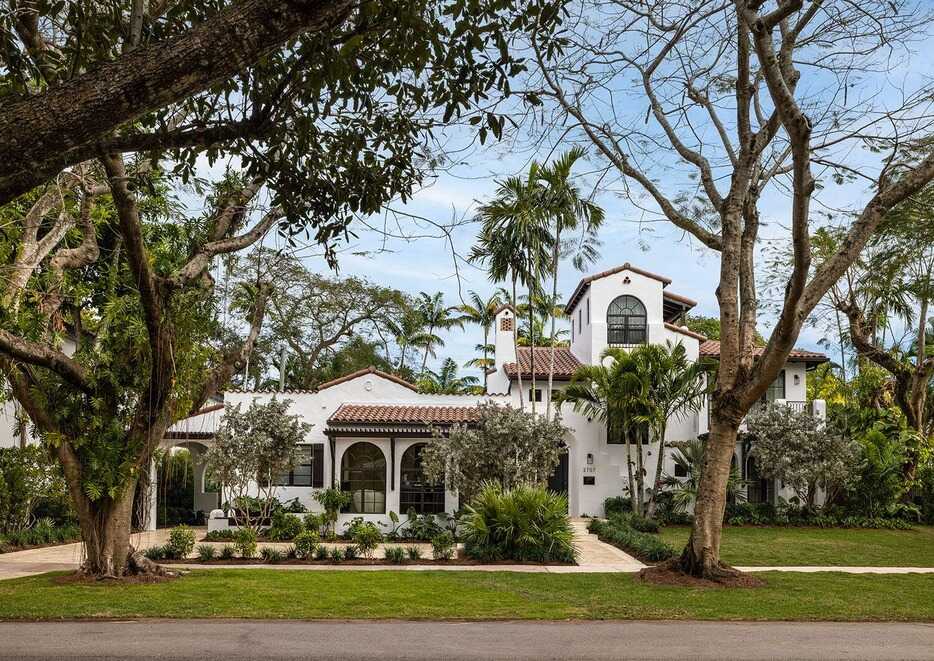
Coral Gables, often dubbed “The City Beautiful,” is a neighborhood defined by its lush greenery and distinctive Mediterranean Revival architecture. Developed in the 1920s by George Merrick, this style draws inspiration from Spanish and Italian villas, featuring stucco walls, red-tile roofs, wrought-iron balconies, and grand arched entryways.
The neighborhood’s iconic landmarks, such as the Biltmore Hotel and the Venetian Pool, exemplify this elegant style. Coral Gables also emphasizes uniformity in design, ensuring a cohesive and timeless aesthetic throughout the area. This dedication to preserving architectural harmony makes it one of Miami’s most picturesque and prestigious neighborhoods.

Coconut Grove
Coconut Grove, Miami’s oldest neighborhood, boasts a unique blend of Bahamian and modern architecture. The area’s early settlers, many of whom were from the Bahamas, brought with them their distinctive building traditions. Here, you’ll find charming Conch-style homes alongside sleek Tropical Modernist designs that seamlessly integrate indoor and outdoor spaces.
Notable examples of Tropical Modernism include the stunning The Kampong botanical garden and various private residences designed by renowned architects such as Max Strang.
Little Havana
Little Havana, the cultural heart of Miami’s Cuban-American community, features an architectural style deeply rooted in its heritage. Modest, single-story homes with vibrant facades, decorative tiles, and shaded porches define the neighborhood’s streetscape. These elements reflect the influences of Spanish Colonial architecture, adapted to Miami’s tropical climate.
Landmarks like the Tower Theater and Máximo Gómez Park (Domino Park) capture the spirit of Little Havana’s architectural identity. While functional and unassuming, these designs carry deep cultural significance, symbolizing the resilience and creativity of Miami’s immigrant communities.
MiMo District
The Miami Modern (MiMo) architectural style emerged in the post-war era.
Concentrated along Biscayne Boulevard, the MiMo District is characterized by sleek lines, asymmetrical designs, floating staircases, and whimsical details like boomerang shapes and kidney-shaped pools.
Landmarks such as the Vagabond Motel and the Fontainebleau Miami Beach showcase MiMo’s playful yet sophisticated aesthetic. This style reflects the optimism of the 1950s and 1960s, as Miami transformed into a hub for tourism and modern living.
Downtown Miami and Brickell
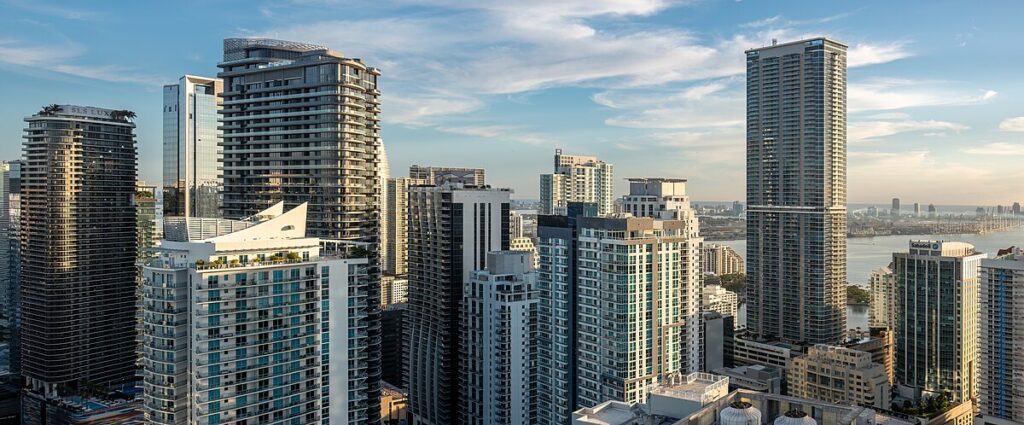
Downtown Miami and Brickell represent the city’s modern evolution, with skyscrapers that redefine urban living. Architectural styles here lean heavily on contemporary and minimalist design, characterized by glass facades, clean lines, and sustainable features.
Landmarks like the Pérez Art Museum Miami (PAMM) and Brickell City Centre reflect this modern aesthetic while incorporating elements of green design and public spaces.
Design District
The Miami Design District stands out as a playground for experimental and avant-garde architecture.
Here, you’ll find a mix of styles that push boundaries and redefine traditional concepts of design. Iconic structures like the Fly’s Eye Dome by Buckminster Fuller and the Sou Fujimoto-designed Palm Court blend functionality with artistic expression.
The Design District’s emphasis on collaboration between architects, designers, and artists has made it a hub for creativity and innovation, further solidifying Miami’s reputation as a global design destination.
A City of Architectural Diversity
Miami’s architectural landscape is a reflection of its diverse cultural heritage and its constant evolution. From the Art Deco gems of South Beach to the contemporary masterpieces of the Design District, the city offers a fascinating array of architectural styles to explore and admire.
So, the next time you find yourself in Miami, take some time to appreciate the buildings that make this city so unique.
