

This article explores the nuances of contemporary interior design in Miami, distinguishing it from mid-century modern style by highlighting its fluid, evolving nature that reflects present-day aesthetics and coastal lifestyles. It emphasizes key elements such as clean lines, deliberate contrast, tactile surfaces, and seamless technology integration, showing how Design Solutions Miami delivers bespoke, turnkey luxury homes through a holistic, multidisciplinary approach.
Contemporary interior design is one of the most searched style terms in residential design today. It is also one of the most widely misunderstood. For affluent homeowners who appreciate spaces that feel current, composed, and quietly confident, contemporary design offers the perfect aesthetic vocabulary. However, executing this style flawlessly in South Florida requires filtering global aesthetics through a specific coastal lens.
If you have been drawn to homes that feel curated without being cold, and that hold your life beautifully rather than performing for guests, you are likely responding to contemporary design. Bringing this vision to life requires a multidisciplinary team capable of bespoke execution. It demands a white glove turnkey approach where decoration and architecture are planned together from the very beginning.
Understanding the essence of contemporary design
At its core, contemporary interior design refers to design that reflects the present moment. Unlike historical styles that are fixed to a specific period, contemporary style is always evolving. What is considered contemporary today incorporates the aesthetic sensibilities, the advanced materials, and the cultural influences of right now.
This is the essential distinction that many people miss. Contemporary design is not a rigid look. It is a time reference. It borrows freely from many traditions, including minimalism and classicism, but it filters all of them through a current lens. It does not follow a strict rulebook, which is precisely why it feels so alive and responsive to how people actually live today.
The distinction between contemporary and modern
Many homeowners use the words contemporary and modern interchangeably, but they are fundamentally different. Modern interior design refers to a specific historical movement primarily from the early to mid twentieth century. Modern design has a strictly defined aesthetic based on clean geometry, flat surfaces, and the principle that form follows function.
Contemporary style, by contrast, has no fixed era. It is fluid. A contemporary room might incorporate a vintage modern chair placed next to a piece of raw edge stone sourced from Brazil, all united by a fresh and unexpected color palette. The coherence comes not from historical consistency but from the expert eye of the designer and the personal sensibility of the client.
Key elements of contemporary interior design in miami
Translating contemporary design to the luxury residential market in Miami requires a specific understanding of the local environment. The tropical light, the coastal setting, and the international clientele have produced a design culture here that is genuinely distinct.
Clean lines and deliberate contrast
Contemporary interiors favor clean and uncluttered lines. Furniture tends toward simple silhouettes without excessive ornamentation. However, contemporary spaces are not minimal in the extreme sense. Where pure minimalism removes elements until almost nothing is left, contemporary design edits with intention. Every element earns its place.
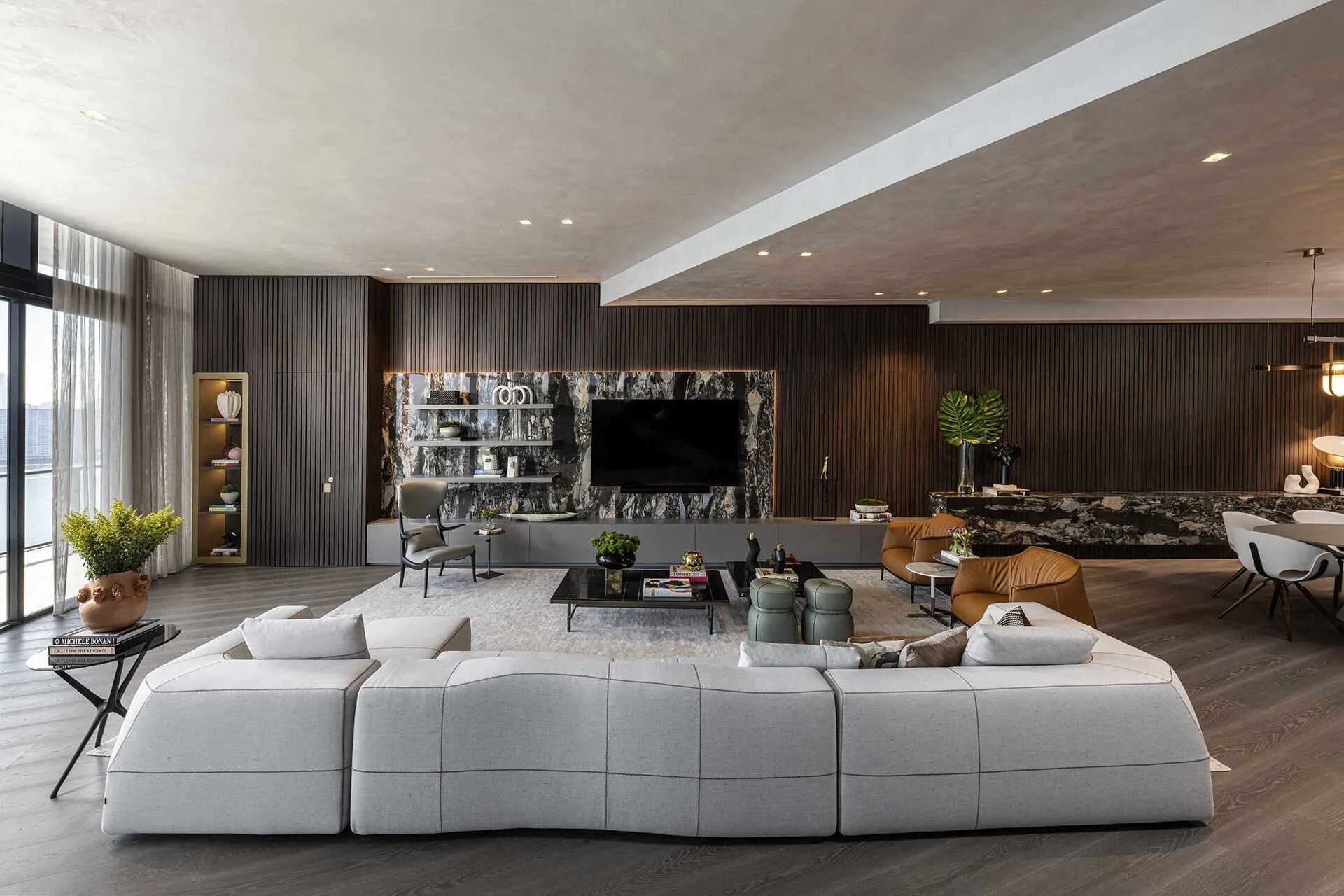
These spaces typically begin with a neutral base of whites, warm grays, greiges, and natural tones in stone and plaster. This foundation creates visual breathing room and allows the eye to rest. Contrast is then introduced intentionally. You might see a dark marble kitchen island anchoring an open living room, or a sculptural chair in bold upholstery acting as a vibrant focal point. These precise moments of contrast give contemporary spaces their unique energy.
Tactile surfaces and material integrity
Texture has become as crucial as color in defining a luxury contemporary space. From Venetian plaster to natural wood slats, tactile surfaces add depth, dimension, and a sense of craftsmanship that flat drywall simply cannot replicate.
Contemporary interior design embraces natural materials, particularly stone, wood, linen, and leather, but always with an absolute emphasis on the quality of the finish. The difference between a contemporary interior and a rustic one is the precision with which the materials are specified and installed. In a demanding climate like Miami, this material selection is also a performance decision. Outdoor grade textiles and properly sealed natural stones are technical specifications that protect a client’s investment.
The necessity of multidisciplinary integration
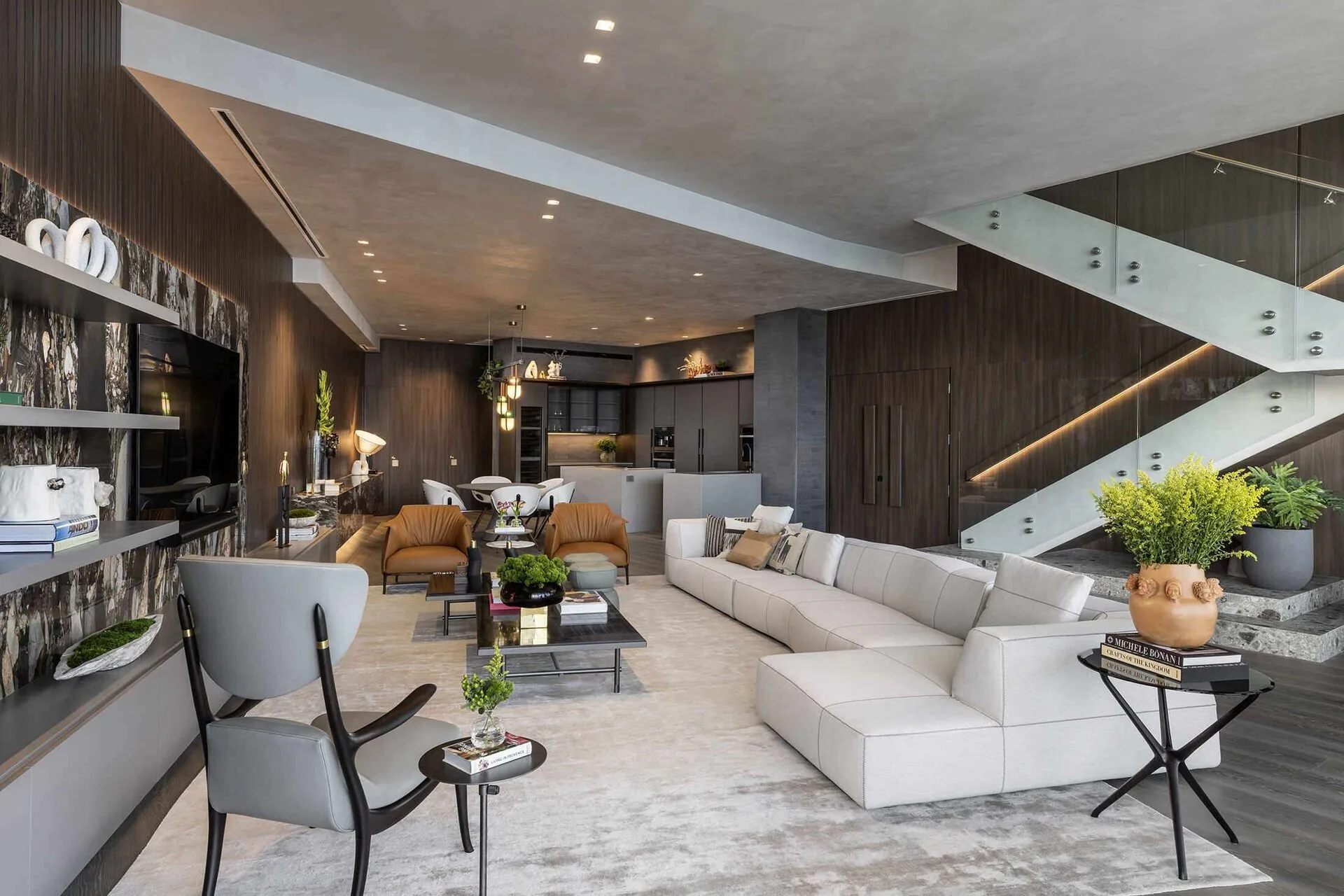
Executing contemporary interior design at the highest level does not separate decoration from architecture. The two must be planned together. This means the interior design team is involved in crucial decisions about room layout, ceiling height, and window placement before a single wall is built.
This is particularly true regarding technology integration. Unlike traditional design styles, contemporary interior design fully integrates technology rather than concealing it awkwardly. Smart home systems, architectural lighting, motorized shading, and built in sound are designed into the space from the beginning. A well executed contemporary interior makes technology feel invisible when you are not using it and completely effortless when you are.
Delivering bespoke execution with a white glove approach
Achieving the seamless, millimeter perfect finish required by contemporary design demands rigorous project management. Design Solutions Miami executes every project through a white glove turnkey service model. This comprehensive approach covers everything from the initial architectural drawings to global procurement and daily site oversight.
Whether developing a sculpted sanctuary on the Venetian Islands or a contemporary penthouse in Sunny Isles Beach, this model eliminates the coordination gaps that often plague large scale renovations. Luciana Fragali approaches each project with a commitment to creative ownership, ensuring that every detail reflects the client’s identity while maintaining the highest standards of contemporary elegance.
The right contemporary interior does not make you feel like you are walking into a showroom. It makes you feel like you are walking into a space that was inevitably and perfectly designed just for you.
Frequently asked questions about Contemporary Design
What is the difference between modern and contemporary interior design?
A Modern design refers to a specific historical era from the mid twentieth century. Contemporary design reflects the present moment, blending fluid aesthetics with clean lines and deliberate high contrast.
How do you add warmth to a contemporary interior?
Expert designers introduce organic warmth through tactile surfaces like Venetian plaster, natural wood paneling, and layered textiles, ensuring the space feels deeply inviting rather than sterile.
